
On the picture below is my local stargate that will take you for a journey :)) do not get scared... try to get patience, read and look.
 I am living in a place that has very long history. It is proven back 4.000 years. Shortly I will try to introduce it to you. I will put some links, for those of you who would like to see/read more.
Starting from the big picture and globe perspective, I am located pretty close to... ehe... Canada (hi jodi and clayton!).
 But still it is much further than any place in Europe.


The biggest and closest city is capitol of Poland Warsaw is now a city where history, including communist time meet the global culture and infuence - see picture below. Unique in the region is river Vistula (Wisła) which is still not controlled and wild meandering through the City (picture courtesy of samper.pl)
 Komorow - a village where I live has 3000 inhabitants and is situated 16 km south-west of Warsaw. Linked to the centre of the City by electric trains (WKD).

We have a primary and secondary school, public library, a Roman Catholic parish church, several shops and a health centre.
There is historic palace situated within an old park - it had been converted into hospital. We have also old timber cottages, of which few have survived. The oldest buildings include villas from 1900 - 1939. The neighbouring 18th century farm buildings were demolished in 1998 (local authorities lack of respect for local heritage). Luckily still there is few surviving old avenues lined with ancient lime birch and chestnut trees (one planted with four rows of trees), most of which are now under preservation order. They still provide the feeling of grand picturesque design of the old park and farmlands.
The first written record of Komorow (Comorovo) dates to the beginning of the 15th century. Komorow was then a village owned by at least two closely related families of noblemen bearing the Roch coat of arms. Altogether there were probably about 60 people living.
The older parts of Komorow can be easily recognised by tall mature trees, spacious gardens (of 10 - 20 thousand square feet on average), stylish villas and a prevailing atmosphere of peace and quiet. I am living in the newer part, located closely to old part, so I can fully enjoy its beauty and watch squirrels running around everywhere.
Komorow has become extremely fashionable recently and attracts a lot of new wealth. The new population consists mainly of business entrepreneurs and yuppies, film and TV stars and politicians. I would say I will not list their names, for privacy reasons, but they are listed in Wikipedia as Komorow inhabitants (linked page does not exist in Polish) so how could I help?
Already before it was known as a place where Maria Dabrowska was living - famous Polish writer - she donated her house to the locals and there is a library now. In the neighbourhood there was also living Jaroslaw Iwaszkiewicz, another famous Polish writer - his house is a museum now - which can be visited even virtually - if you click the small thumbnail pictures on the bottom right - you will see panoramic pictures of rooms and house.
Thank you for interest and reading this post until here - I know I have challenged your patience :)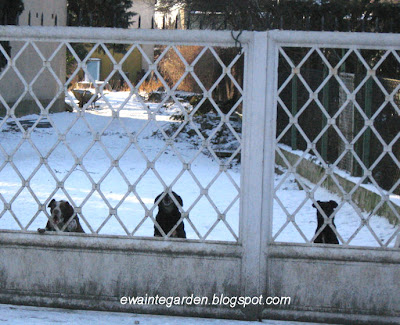
 I am living in a place that has very long history. It is proven back 4.000 years. Shortly I will try to introduce it to you. I will put some links, for those of you who would like to see/read more.
Starting from the big picture and globe perspective, I am located pretty close to... ehe... Canada (hi jodi and clayton!).
But still it is much further than any place in Europe. Look at the maps below it will get you to the perspective of my country Poland:
The biggest and closest city is capitol of Poland Warsaw is now a city where history, including communist time meet the global culture and infuence - see picture below.
The building is called "gift from Stalin" and was built on the remains of the old Warsaw never reconstructed after Second World War and was through decades a symbol of communism.
Unique in the region is river Vistula (Wisła) which is still not controlled and wild meandering through the City (picture courtesy of samper.pl) Komorow - a village where I live has 3000 inhabitants and is situated 16 km south-west of Warsaw. Linked to the centre of the City by electric trains (WKD).We have a primary and secondary school, public library, a Roman Catholic parish church, several shops and a health centre.
There is historic palace situated within an old park - it had been converted into hospital. We have also old timber cottages, of which few have survived. The oldest buildings include villas from 1900 - 1939. The neighbouring 18th century farm buildings were demolished in 1998 (local authorities lack of respect for local heritage). Luckily still there is few surviving old avenues lined with ancient lime birch and chestnut trees (one planted with four rows of trees), most of which are now under preservation order. They still provide the feeling of grand picturesque design of the old park and farmlands.
Komorow is situated on the Utrata river, associated with the name of Fryderyk Chopin. The most famous Polish composer was born and brought up in Zelazowa Wola on the banks of the Utrata.
The oldest signs of settlements in the area date from an early bronze age, i.e. from 1800-1200 BC.
While searching about history of Komorów, I realised that Komorow was part of a huge centre of ancient metallurgical industry - the second biggest in Europe outside the Roman Empire - that I was studying in college, but somehow I did not link it until last night :)
History and evidences of metallurgic past gathered during recent excavation - called as most important Polish archeology discoveries of XX century - can be examined in detail at the local museum (Museum of Ancient Metallurgical Works in Mazovia) in the neighbouring town of Pruszkow.
Discoveries are recognised as very important, because they proof iron production at such large and never discovered before scale, that it was true arming industry of those time. Scientists prove that it was the source of independence of barbaric Europe against Roman Empire.
The first written record of Komorow (Comorovo) dates to the beginning of the 15th century. Komorow was then a village owned by at least two closely related families of noblemen bearing the Roch coat of arms. Altogether there were probably about 60 people living.
In 1596 Warsaw replaced Cracow as the capital of Poland. As result there came to the area a lot of wealthy nobility. As a consequence large plots of land in Komorow and the neighbouring estates were, at the beginning of the 17th century, bought by a wealthy aristocrat, Castellan Chadzynski, and a government official from Warsaw named Sobolewski.
After the completion of a splendid Art Nouveau style palace the owners began selling out some best plots of land with pine forest. They were acquired by wealthy Warsaw bourgeoise for residential development.
All this happened at the time of growing popularity in Poland of the Garden-City Movement founded in England by Ebenezer Howard. The trend to "work in the city but live in the countryside" drew more new investment. At the same time Komorow became fashionable as "a country resort" with a number of timber lodges offering holiday accommodation.
The older parts of Komorow can be easily recognised by tall mature trees, spacious gardens (of 10 - 20 thousand square feet on average), stylish villas and a prevailing atmosphere of peace and quiet. I am living in the newer part, located closely to old part, so I can fully enjoy its beauty and watch squirrels running around everywhere.
Komorow has become extremely fashionable recently and attracts a lot of new wealth. The new population consists mainly of business entrepreneurs and yuppies, film and TV stars and politicians. I would say I will not list their names, for privacy reasons, but they are listed in Wikipedia as Komorow inhabitants (linked page does not exist in Polish) so how could I help?
Natalia Kukulska
Bogusław Linda
Cezary Pazura
Joanna Sierko-Filipowska
Zbigniew Kowalewicz
Zbigniew Zamachowski
Janusz Józefowicz
Magda Umer
Henryk Talar
Michał Bajor
Wiesław Tupaczewski - Kabaret OT.TO
Already before it was known as a place where Maria Dabrowska was living - famous Polish writer - she donated her house to the locals and there is a library now. In the neighbourhood there was also living Jaroslaw Iwaszkiewicz, another famous Polish writer - his house is a museum now - which can be visited even virtually - if you click the small thumbnail pictures on the bottom right - you will see panoramic pictures of rooms and house.
Thank you for interest and reading this post until here - I know I have challenged your patience :)
In current decade there is also a lot of dogs currently barking around.... too much... nervous dogs...


 Lately I have problems with watering properly plants - especially those requiring moist conditions - I even bought automatic watering device, but for some reasons didn't istall it. It takes space also that could be filled with plants - that's main reason I guess. I think I should change my approach and first group plants that like moist and then install that cute device I bought.
 Crown of Thorns, scientific name: Euphorbia milii var. splendens. I am not sure which kind it is, but it might be 'Dwarf Apache'.


